 Keen
Get Keen
How to remember names
Listen to the name, say it back, turn it into a picture and link that picture to the person. Recall the name once during the conversation and again later; the five-step method below shows how.
You shake hands, hear the name, and five seconds later it is gone. That is not a bad memory. Most of the time the name never went in, because you were busy thinking about what to say next. Here is a simple method that fixes that, and a short practice you can try right now.
What are the five steps to remember a name?
- Catch the name. When someone says their name, stop planning your reply for one second and just listen. If you missed it, ask straight away: "Sorry, was that Ann or Anne-Marie?" Asking at once is easy. Asking an hour later is not.
- Say it back. Use the name once, out loud, in your first sentence: "Nice to meet you, Margaret." Saying it makes you notice it, and you hear it a second time.
- Pick one feature. Look at the face for one thing that stands out: curly hair, round glasses, a beard, a big smile, a bright jumper. This gives the name somewhere to stick.
- Make a silly picture. Join the name and the feature in one odd, vivid picture. Margaret has curly hair: picture a margarita glass balanced in her curls. Bill has a big nose: picture a duck's bill on it. The odder the picture, the better it sticks.
- Recall it later, and tomorrow. A few minutes later, look at the person and say the name to yourself. Do it again that evening, and once more the next day. Remembering the next day is the real test, and each time you pull a name back it gets easier to find.
How do you turn names into pictures?
Some names make a picture by themselves. Others need a small push. Three easy ways in:
- Sounds like: Carol sounds like a Christmas carol, so picture her singing. Gary sounds like "garage".
- Someone you know: picture the new Paul standing next to a Paul you already know, or a famous one.
- Meaning: Rose, Hunter, Baker, Fisher and Brook all come with a picture ready made.
The picture does not need to be clever or kind. Nobody will ever see it. It only needs to be quick and a little ridiculous.
Can you recall five people at a party?
Read each line once. For each person, make a silly picture that joins the name to the detail. Then scroll down without looking back.
- Rose is wearing a red scarf.
- Frank has a big grey moustache.
- Priya is holding a cup of tea.
- Tom is very tall.
- Helen has bright green glasses.
Pictures you might have made: a rose tucked into the red scarf; a frankfurter for a moustache; tea poured into a pie ("Pri-ya"); a tom-tom drum on top of a tall man's head; green glasses on Helen of Troy.
Now, without scrolling up: who had the green glasses? Who was very tall? Who held the tea? Who had the red scarf? Who had the moustache?
Show the answers
Helen, Tom, Priya, Rose and Frank.
Then try it once more tomorrow morning, before you look. That next-day answer is the one that counts. For a quick check on lists and numbers, try our free memory test.
Which small habits help you remember names?
- Write it down after. After a meeting or a party, note the names with one detail each: "Sam, Lisa's brother, cycles to work."
- Use the name when you say goodbye. "Good to meet you, Sam." One more repeat, at the moment it is easiest to forget.
- Fewer names, done well. In a big group, choose the three or four people you will see again and do the method properly for them.
- It is fine to ask. "Remind me of your name?" is better than avoiding someone for a year. Then use the method the second time.
Why do names get harder after 50?
Names slip more than anything else, and that gets more noticeable from middle age. Two things from memory research explain a lot of it:
- A name carries no meaning. In a well-known 1987 study by McWeeny and colleagues, people found it easier to remember that a man was a baker than that his name was Baker. The job comes with pictures and facts attached. The surname is just a sound. That is why step 4 above turns the name into a picture: it gives the sound something to hang on.
- Tip-of-the-tongue moments rise with age. Burke and colleagues (1991) found that older adults had more of them than younger adults, and that names of people were the most common case. You know the person, you know you know the name, and it will not come. Usually it turns up later, often when you stop trying.
So the fix after 50 is not trying harder in the moment. It is a better first catch, and a few planned repeats: say the name back, make the picture, and recall it that evening and the next day. When a name is on the tip of your tongue, go through the alphabet slowly for the first sound, or think of where you last saw the person. Then let it go. It often arrives a minute later.
Forgetting a name now and then is common at every age. The NHS advises seeing a GP if memory problems affect your day-to-day life (NHS: memory loss). This guide is about everyday practice. It is not a test and not medical advice.
How can you remember names at church?
Church is one of the hardest places for names. You see the same people every week, but only for a handshake at the door or five minutes over coffee. After a year of friendly hellos it feels too late to ask. The same goes for a club, the school gate or next door. A few things that work:
- Ask once, with a reason. "I know we've said hello for ages, but I don't think I ever caught your name." People are usually pleased you asked, and nobody minds being asked once.
- Use where they sit. Most people sit in the same place each week. Link the name to the seat: Grace, third row by the window, picture light pouring onto her. During the notices, look around and name the people you can see. The ones you cannot place are the ones to ask about over coffee.
- Two new names a week, not ten. Over coffee after the service, pick two people and do the method properly: say the name back, find one feature, make a picture. Two names a week is about a hundred in a year.
- Study the photo directory. If your church has a pictorial directory or a members' page, look through it at home. Cover the names, look at a face, say the name, then check. It is the same as flash cards, and it means next Sunday you start with a head start.
- Link the name to the place. Joan at the bowls club: picture her rolling a giant jam jar down the green. The place does half the remembering for you.
- Note it straight after. One line in your phone or the back of the bulletin: "Joan, bowls, has a spaniel." Read the notes before the next week.
- Use it next time. "Morning, Joan." Saying it out loud the first few times is what makes it stay.
Questions
How can I train my brain to remember names?
Practise the steps on purpose until they become a habit: catch the name, say it back, pick one feature, make a picture, and recall it later. A few minutes a day with new names works better than one long session. Keen's names and faces lesson gives you five new people to learn and asks about them again the next day.
Why is it harder to remember names as you get older?
Names carry no meaning, so they are harder to hold than facts about a person, and tip-of-the-tongue moments with names become more common with age. A better first catch helps: say the name back, link it to a picture and recall it again later that day and the next. If memory problems affect your daily life, talk to a doctor.
How do I remember names at church?
Link each name to where the person sits, learn two new names a week over coffee, and look through the church photo directory at home with the names covered. If you missed a name long ago, ask once: most people are glad you did.
Is there an app to help remember names?
Yes. Some apps store notes about people you meet; others, like Keen on Android, help you practise remembering names and faces. See our guide to apps for remembering names.
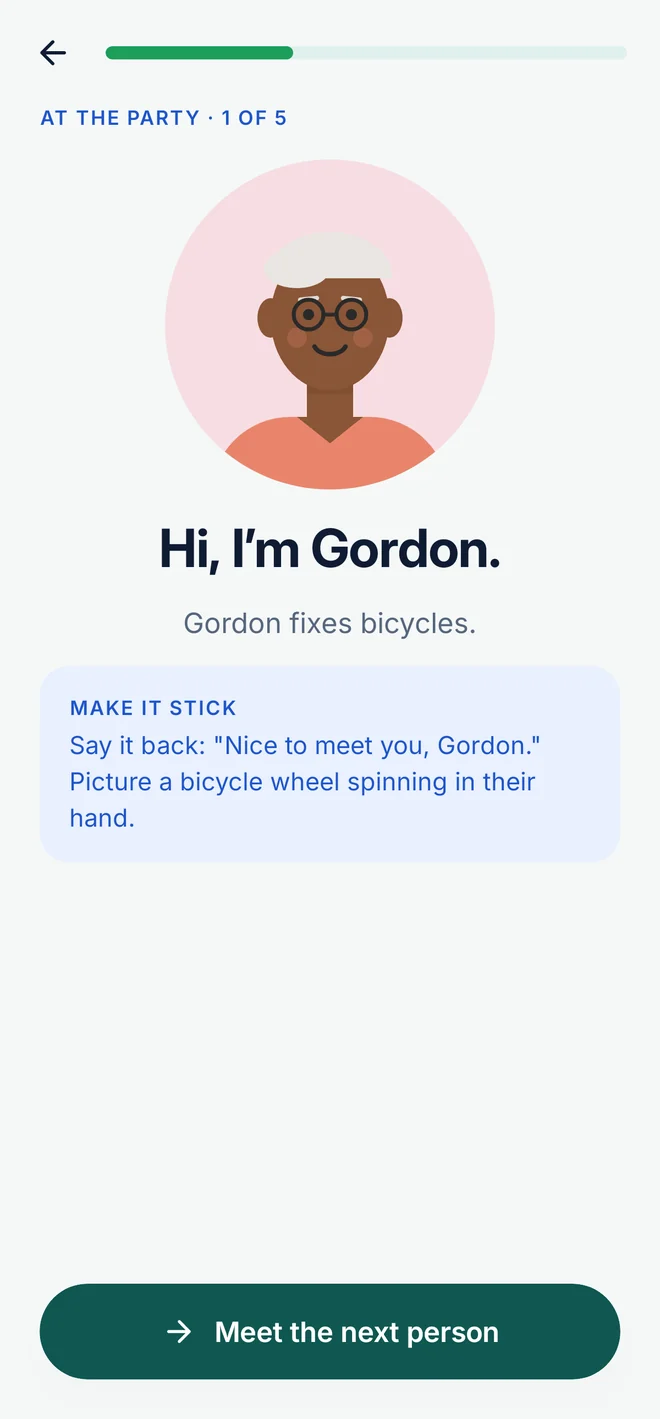
Practise it ten minutes a day
Keen is an Android app with a names and faces lesson built on this method. You meet five people at a party, recall their names, and Keen asks about them again the next day. It is part of ten calm minutes a day for adults 40 and over, with lessons for shopping lists, PINs and where you put your keys. Choosing a name app? See what to look for in an app to remember names.