 Keen
Get Keen
How to remember where you put things
Pause as you put an item down, say its location and picture the item interacting with that place. Give frequently lost items a fixed home; if something is already missing, retrace the last time you used it.
You put your keys down, and ten minutes later you have no idea where. Usually you did not forget the place. You never noticed it, because your hands did the job while your head was somewhere else. Here is a three-second habit that fixes that, and a short practice you can try now.
Why do you lose your keys and glasses?
Putting down keys, glasses or a phone is something you do many times a day. Jobs like that run on autopilot: you are thinking about the kettle, the door or the next thing to do, so the place never gets your attention. With no attention, there is nothing to remember later. The fix is not a better memory. It is one second of noticing.
How does the three-second method work?
- Stop for one second. As you put the thing down, pause and look at the spot. That pause switches autopilot off.
- Say it. Quietly, or in your head: "Keys, fruit bowl." Saying it makes you notice it.
- Make a vivid link. Join the thing and the place in one odd picture. The keys are biting into a banana. Your glasses are wearing the bookshelf. The sillier the picture, the better it sticks.
- Give the worst offenders a home. Keys, glasses and phone each get one fixed place, and they go there every time. A home means there is nothing to remember.
Can you remember five things in five places?
Read each line once. For each one, make a silly picture that joins the thing to the place. Then scroll down without looking back.
- Your reading glasses are on the microwave.
- The car keys are in your coat pocket.
- Your phone is on the bathroom shelf.
- The parking ticket is in the cookbook.
- Your wallet is under the sofa cushion.
Pictures you might have made: glasses spinning round inside the microwave; the coat jangling like a bell; the phone taking a shower; the ticket baked into a cake; the sofa sitting on a fat wallet.
Now, without scrolling up: where is the parking ticket? Where are the glasses? The wallet? The phone? The car keys?
Show the answers
Cookbook, microwave, under the sofa cushion, bathroom shelf, coat pocket.
Ask yourself again in an hour. For a quick check on lists and numbers, try our free memory test.
What can you do when an item is already lost?
- Go back, not around. Walk back through what you did since you last had it. The place is usually on that path.
- Check the "on the way" spots. Things often land where your hands needed to be free: by the kettle, the door, the bin, the fridge.
- Look properly once. A slow look at each spot beats three fast looks round the whole house.
Is losing things normal?
Misplacing things now and then happens at every age, and more when you are tired, busy or stressed. The NHS notes that some memory loss can be a natural part of getting older, and advises seeing a GP if memory problems affect your day-to-day life (NHS: memory loss). This guide is about everyday practice. It is not a test and not medical advice.
Related
- How to remember names
- How to remember birthdays, dates and phone numbers
- Memory exercises for adults (printable, 5 minutes)
- Free memory test (3 minutes, not a medical test)
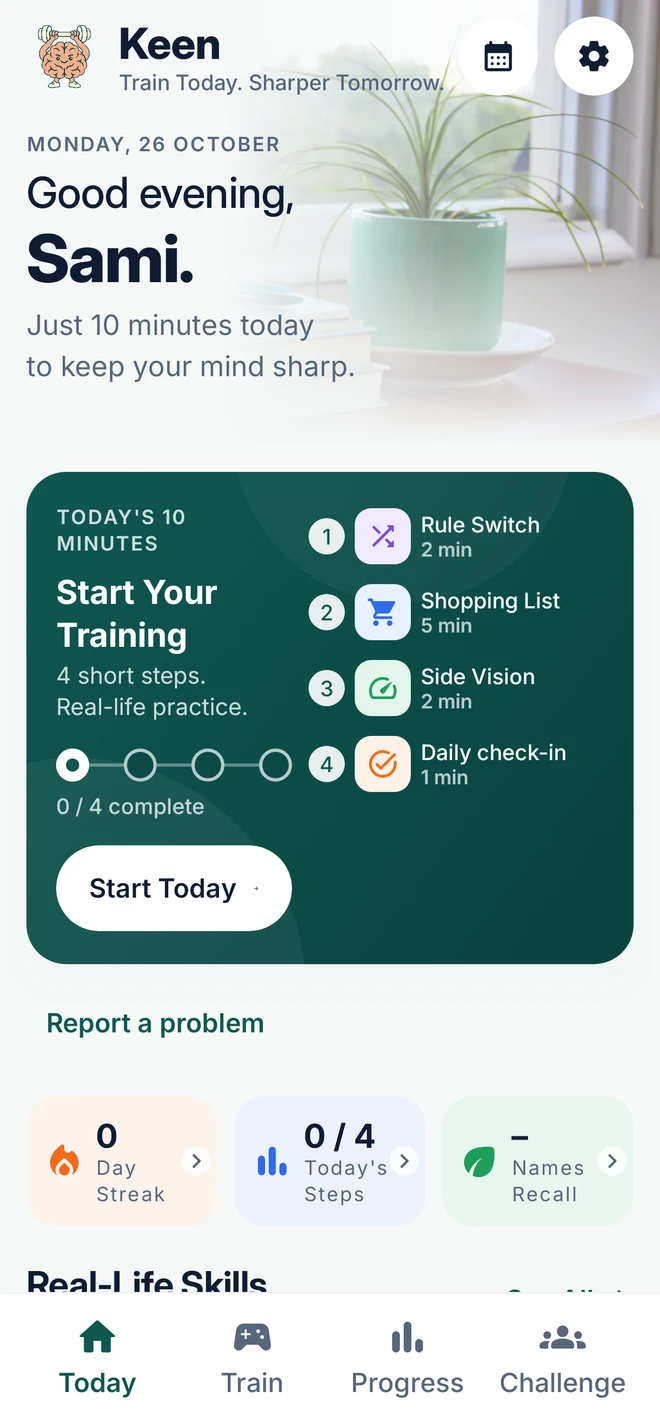
Practise it ten minutes a day
Keen is an Android app with a "Where did I put it?" lesson built on this method: you tie objects to rooms with vivid links, then find them again later. It is part of ten calm minutes a day for adults 40 and over, with lessons for names, shopping lists and PINs.