 Keen
Get Keen
How to remember birthdays, dates and phone numbers
Break numbers into short chunks, connect dates to something familiar and put important birthdays and appointments in one calendar with reminders. Practise recalling the numbers you want to learn, then check them.
Numbers and dates are hard to remember because they mean nothing on their own. 14 March is just a date until it is your granddaughter's birthday. The trick is to give each number something to hang on: a rhythm, a picture, or a date you already know. Here are simple ways to do it, and a short practice to try now.
How can you remember phone numbers and PINs?
A long string of digits is hard to hold. Short pieces are easy. This is called chunking, and it is how most people already remember their own phone number.
- Split it. 07946 381 552 is three pieces, not eleven digits. Pieces of two to four digits work best.
- Say it in rhythm. Read it out loud with a short pause between the pieces, the same way every time.
- Give a piece a meaning. 1966 is a famous year, 25 is Christmas Day, 007 is James Bond, 12 is a dozen eggs. One meaningful piece is often enough to pull out the rest.
- Recall it later. Look away and say it a few minutes later, and again the next day. That is when it moves from "just read" to "know".
How can you remember birthdays and anniversaries?
- Write them all down once. One calendar, paper or phone, with every birthday in it and a reminder a week before, so there is time to send a card.
- Look a month ahead. On the first of each month, read whose birthday is coming. A one-minute habit beats relying on a social media app.
- Link the date to one you know. Your grandson was born on 4 July: picture him with fireworks. Your friend's birthday is the day after yours: easy. Two days before Christmas, the first day of spring, the same day as your wedding anniversary.
- Make a picture for the number. Numbers can have shapes: 2 is a swan, 8 is a snowman, 11 is a pair of chopsticks. A swan in a snowman's scarf is 28.
Can you recall one number and two dates?
Read these once. Chunk the number, and make a picture for each date. Then scroll down without looking back.
- The plumber's number: 0161 496 0732
- Anna's birthday: 25 October
- The dentist: Thursday 11 December
Ideas: "0161" is four digits you say as one, "496" is four-nine-six, "0732" is seven-thirty-two. Anna's birthday is exactly two months before Christmas Day. The dentist is on the 11th: two chopsticks holding a tooth.
Now, without scrolling up: what is the plumber's number? When is Anna's birthday? When is the dentist?
Show the answers
0161 496 0732, 25 October, Thursday 11 December.
How can you remember important appointments?
- One calendar. Letters, texts and emails all go into the same calendar the moment they arrive.
- Two reminders. The day before, to plan, and an hour before, to leave.
- When-then plans. Tie the job to a moment that will happen anyway: "When I make my morning tea, I check today's calendar."
Is forgetting numbers normal?
Everyday slips happen at every age, and more when you are tired, busy or stressed. The NHS advises seeing a GP if memory problems affect your day-to-day life (NHS: memory loss). This guide is about everyday practice. It is not a test and not medical advice.
Questions
How do I remember birthdays without Facebook?
Put every birthday in your phone or paper calendar once, with a reminder a week before, and look at the month ahead on the first of each month. Then link the dates you care about most to a date you already know.
How can I memorise a phone number in my head?
Break it into short pieces of two to four digits, say it out loud in that rhythm, and turn one or two pieces into a picture or a date you know. Then recall it a few minutes later and again the next day.
How do I stop missing appointments?
Use one calendar for everything, set two reminders (the day before and an hour before), and make a when-then plan: when I get home tonight, I put tomorrow's letter by the door.
Related
- Free memory test (3 minutes: a shopping list and a number test)
- How to remember where you put things
- How to remember meetings and names at work
- Memory exercises for adults (printable, 5 minutes)
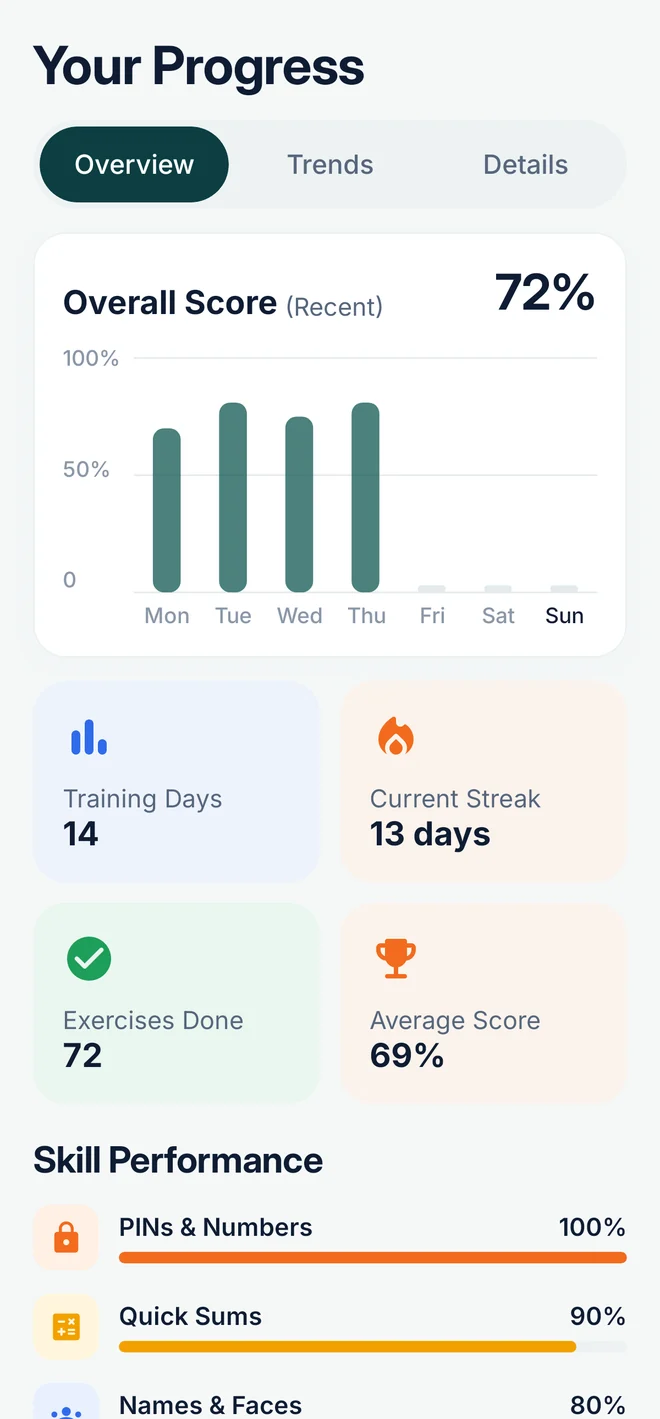
Practise it ten minutes a day
Keen is an Android app with a PINs and phone numbers lesson built on chunking, and a lesson for remembering to do things later. It is part of ten calm minutes a day for adults 40 and over, with lessons for names, shopping lists and where you put things.